Category

Retirement Planning

Choosing a Superannuation Fund

A woman in work attire standing with her arms crossed and one hand on her chin thinking deeply.

Superannuation, also known as super, is a crucial aspect of financial planning for individuals and families in Australia. It provides a means to save for retirement and secure a comfortable future. However, with a multitude of super funds available, choosing the right one can be overwhelming. In this comprehensive guide, we will explore the factors to consider when selecting a superannuation fund in Australia. From comparing performance and fees to analyzing investment options and insurance offerings, this article will equip you with the knowledge needed to make an informed decision.

Understanding Superannuation Funds

What is Superannuation?

Superannuation is a system in Australia designed to help individuals save for their retirement. It operates on a compulsory contribution basis, where both employees and employers contribute a percentage of the employee’s salary into a superannuation fund.

Types of Superannuation Funds

There are several types of superannuation funds available in Australia, including:

  1. Industry Funds: These funds are typically run by industry or employer associations and are open to employees working in a specific industry.
  2. Retail Funds: Retail funds are offered by financial institutions such as banks and investment companies. They are available to the general public.
  3. Corporate Funds: Corporate funds are established by employers for their employees. These funds are often tailored to meet the specific needs of the company and its employees.
  4. Self-Managed Superannuation Funds (SMSFs): SMSFs are a type of superannuation fund where the members are also the trustees. This gives individuals greater control over their investments but also requires additional responsibilities.

The Importance of Choosing the Right Superannuation Fund

Choosing the right superannuation fund is crucial, as it can significantly impact your retirement savings. Factors such as fund performance, fees, investment options, and insurance offerings can vary between funds. By selecting a fund that aligns with your financial goals and risk tolerance, you can maximize the growth of your superannuation savings over time.

Factors to Consider When Choosing a Superannuation Fund

Performance

Superannuation fund performance is an essential factor to consider when choosing a fund. It is crucial to compare a fund’s investment performance over an extended period, typically five years or more. Look for consistent returns and consider the impact of fees and costs on the overall performance.

Fees

Fees can significantly impact the growth of your superannuation savings. It’s important to compare the fees charged by different funds, including administration fees, investment fees, and any other charges. Generally, lower fees are preferable, as they leave more of your money invested and working for you.

Investment Options

Different superannuation funds offer a variety of investment options. These options can range from conservative to high-growth, and may include diversified portfolios, ethical investments, or sector-specific investments. Consider your risk tolerance and investment preferences when evaluating the investment options offered by different funds.

Insurance Offerings

Superannuation funds often provide insurance options for their members, including life insurance, total and permanent disability (TPD) insurance, and income protection insurance. Assess the premium rates, coverage amounts, and any exclusions or definitions that may affect you. It’s important to choose a fund that offers insurance that aligns with your needs and circumstances.

Additional Services

Some superannuation funds offer additional services beyond the standard investment and insurance offerings. These services may include financial advice, educational resources, and assistance with financial planning. Consider whether these additional services align with your needs and if they add value to your overall superannuation experience.

Choosing the Right Superannuation Fund

Research and Comparison

To make an informed decision when choosing a superannuation fund, it’s essential to conduct thorough research and comparison. Start by researching different funds and their offerings. You can use resources such as the ATO’s YourSuper comparison tool, which provides an online list comparing MySuper products. Additionally, explore the product disclosure statements (PDS) for each fund to gain a deeper understanding of their offerings.

Comparison Websites

Non-government super comparison websites can also be valuable resources when comparing superannuation funds. Websites such as Canstar, Chant West, Morningstar, RateCity, SelectingSuper, and SuperRatings provide information on fund performance, fees, investment options, and additional services. However, it’s important to note that these comparison websites may have promotional links and may not cover all available options.

Seek Professional Advice

If you find the process of choosing a superannuation fund overwhelming or require personalized guidance, it may be beneficial to seek advice from a qualified financial adviser. A financial adviser can assess your individual circumstances, goals, and risk tolerance to recommend suitable superannuation fund options.

Conclusion

Choosing the right superannuation fund is a crucial step towards securing a comfortable retirement. By considering factors such as performance, fees, investment options, insurance offerings, and additional services, you can make an informed decision that aligns with your financial goals and circumstances. Remember to conduct thorough research, compare different funds, and seek professional advice if needed. With the right superannuation fund, you can optimize your retirement savings and enjoy financial security in the future.

Additional Information

It’s important to regularly review and reassess your chosen superannuation fund to ensure it continues to meet your needs and goals. Life circumstances and financial objectives may change over time, and it’s essential to adjust your superannuation strategy accordingly. Regularly monitor your fund’s performance, fees, and investment options to ensure they align with your expectations. Additionally, consider seeking professional advice whenever significant life events occur, such as marriage, divorce, or starting a family, to ensure your superannuation remains on track to meet your long-term goals.


Compare Super Funds

Retail super funds

View and compare rates, performance and fees today.

Industry super funds

View and compare rates, performance and fees today.

How to Calculate Your Retirement Income Needs.

elderly couple chatting with a man

Retirement may seem like a distant dream, but it’s never too early to start planning for it. One of the most crucial aspects of retirement planning is figuring out how much money you’ll need to maintain your desired lifestyle.

It can be daunting to determine your retirement income needs, but fear not! In this comprehensive guide, we’ll walk you through the steps to calculate your retirement income needs, so you can confidently plan for your golden years. From estimating your expenses to considering sources of income, we’ve got you covered. Let’s dive in!

Understanding the Australian Retirement System

Retirement planning in Australia involves navigating the country’s unique retirement system, which consists of the Age Pension, Superannuation, and other income sources. The Age Pension is a government-funded income support payment for eligible seniors who meet the age and income requirements.

The Superannuation system, on the other hand, is a mandatory savings program that requires employers to contribute a portion of their employees’ salary to a retirement fund. Individuals can also make voluntary contributions to their Superannuation accounts to boost their retirement savings.

In addition to these sources, retirees can also consider income from property, investments, and annuities.

Estimating Your Retirement Expenses

Estimating your retirement expenses is an essential step in calculating your retirement income needs. Essential expenses include housing, food and utilities, and healthcare costs, which are necessary for daily living.

Discretionary expenses, such as travel, hobbies, and entertainment, are non-essential expenses that can impact your quality of life in retirement.

It’s important to identify and estimate all of your expected expenses in retirement to calculate your retirement income needs accurately.

Determining Your Retirement Income Sources

Determining your retirement income sources involves evaluating your Superannuation account balance, estimated Age Pension payments, and other sources of income such as investment returns and rental properties. Superannuation contributions are tax-effective and can provide a significant source of retirement income.

It’s also important to consider investment returns, which can vary based on market conditions, and rental properties, which can provide a steady stream of income. By evaluating all of your potential income sources, you can determine how much income you’ll have in retirement.

Try our Retirement calculators to help you figure out if you are on the right track.

Calculating Your Retirement Income Gap

bar graph of retirement plan based on finances

Calculating your retirement income gap involves subtracting your expected retirement income sources from your estimated retirement expenses. If your estimated expenses exceed your expected income, you’ll have a retirement income gap that needs to be closed. By calculating your retirement income gap, you can identify how much additional income you need to fund your retirement expenses and make a plan to close the gap.

Strategies to Close Your Retirement Income Gap

If you have a retirement income gap, there are several strategies you can use to close it. One option is to reduce your expenses by downsizing your home or cutting back on discretionary expenses.

You can also increase your retirement income by delaying your retirement, working part-time, or boosting your Superannuation contributions. It’s important to evaluate each strategy and determine which options are feasible for your financial situation.

Tips for Successful Retirement Planning in Australia

placing coins into a money jar with retirement written underneath it

To ensure successful retirement planning in Australia, it’s important to consider the Age Pension and take advantage of Superannuation tax benefits. Seeking professional advice from a financial planner or retirement specialist can also help you create a retirement plan that suits your needs and financial situation.

What else can you do?

  • Start saving early: The earlier you start saving for retirement, the more time your money has to grow. Consider setting up a Superannuation account and making regular contributions.
  • Consider the Age Pension: The Age Pension is a government-funded income support payment for eligible seniors. It’s important to understand the eligibility requirements and consider how it can supplement your retirement income.
  • Take advantage of Superannuation tax benefits: Superannuation contributions are taxed at a lower rate than regular income. Consider taking advantage of tax benefits by making additional contributions to your Superannuation account.
  • Revisit your retirement plan regularly: Your retirement plan should be regularly reviewed and adjusted to reflect changes in your financial situation and goals.
  • Seek professional advice: Consider consulting with a financial planner or retirement specialist to help you create a personalised retirement plan that suits your needs and financial situation.
  • Delay retirement: Delaying retirement can give you more time to save for retirement and increase your Social Security benefits.
  • Consider part-time work: Working part-time in retirement can provide additional income and help you stay active and engaged in the workforce.

By staying informed about retirement options in Australia and taking action to plan for your retirement, you can ensure a comfortable and secure retirement.

Conclusion

If you haven’t already, now is the time to start planning for your retirement. By taking the steps outlined in this comprehensive guide, you can gain a better understanding of your retirement income needs and develop a plan to achieve your retirement goals. Whether you’re just starting your career or approaching retirement age, it’s never too early or too late to start planning for your future.

The Benefits of Delaying Retirement and How to Plan for It

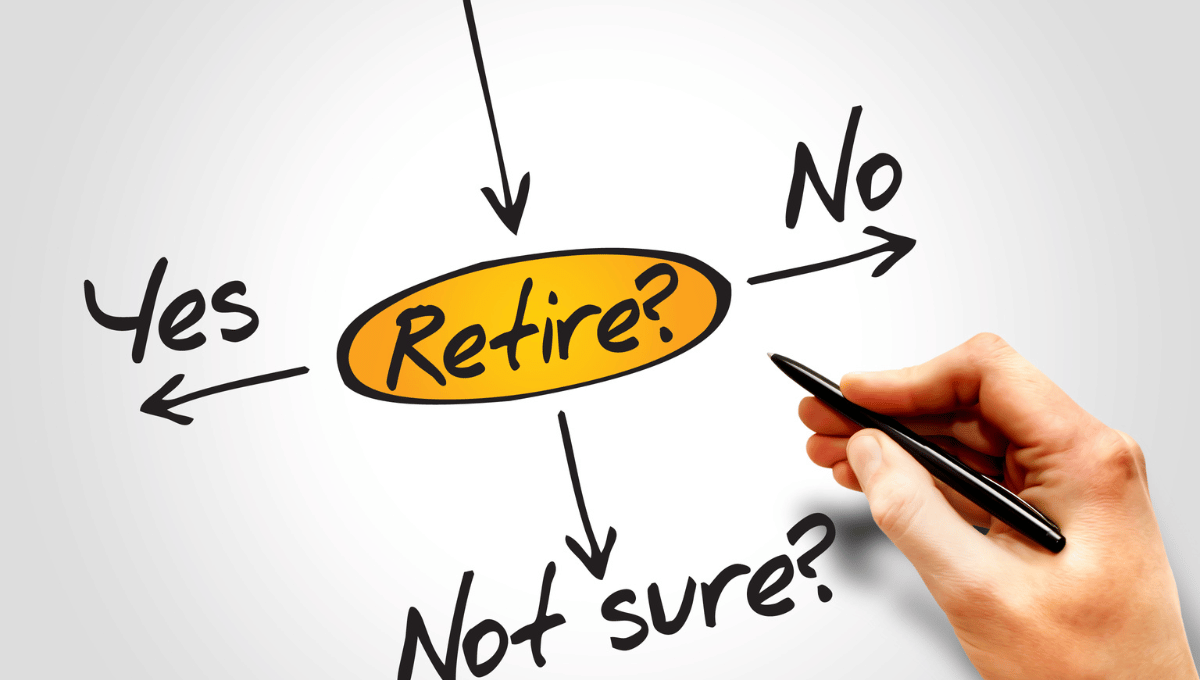
flowchart of retirement with options yes, no and not sure

Retirement used to be a time to finally relax and enjoy the fruits of your labour after years of hard work. However, as people are living longer, healthier lives and facing economic uncertainty, delaying retirement has become an increasingly popular option. But delaying retirement is not just about financial security – it can also bring numerous physical, mental, and social benefits.

In this article, we’ll explore the benefits of delaying retirement and provide practical tips on how to plan for it. Whether you’re considering postponing retirement for financial reasons or just to enjoy more of your golden years, this article is for you.

Benefits of Delaying Retirement

Financial Benefits

One of the most obvious benefits of delaying retirement is the financial security it can provide. By working longer, you can increase your Social Security benefits and contribute more to your retirement savings accounts, allowing you to build a larger nest egg for your retirement. Additionally, delaying retirement can help you avoid tapping into your retirement savings too early, which can ultimately result in a greater total payout over time.

Physical Benefits

Delaying retirement can also have significant physical benefits. By staying active and engaged in work, individuals may experience improved health, including reduced risk for chronic diseases like heart disease, obesity, and diabetes. Additionally, studies have shown that those who work longer have a longer life expectancy, potentially due to the increased physical and mental stimulation that work provides.

Mental Benefits

Working past the traditional retirement age can also provide significant mental benefits. Continuing to work can provide individuals with a sense of purpose and fulfilment, as well as mental stimulation through problem-solving and social interaction. Research has shown that those who work longer have better cognitive function and a lower risk of developing cognitive impairment or dementia.

How to Plan for Delaying Retirement

elderly couple looking at their laptop and mobile phone

1. Assessing Financial Situation

Before making the decision to delay retirement, it’s important to assess your financial situation. This includes identifying your retirement goals and creating a retirement budget to ensure you have enough savings to last throughout your golden years. It’s also important to evaluate your sources of retirement income, including Social Security, pensions, and investments, to determine how delaying retirement may affect these sources. Try our Deferred Annuity Calculator to see what an extra few years can add to your retirement payout.

2. Consider Employment Options

For those looking to delay retirement, there are a variety of employment options to consider. Part-time work, contract work, and starting a business are all viable options for those who want to continue working without the full-time commitment. Additionally, it’s important to consider whether your current employer offers flexible work arrangements, such as telecommuting or reduced hours, that could allow you to continue working while also enjoying more free time.

3. Investing in Health

Staying healthy is crucial for anyone looking to delay retirement, as it can ensure you are able to continue working and enjoying your golden years. This includes investing in physical health through regular exercise and a healthy diet, as well as mental health through activities like meditation, therapy, or hobbies that provide mental stimulation.

4. Building a Support Network

Finally, it’s important to build a support network of family, friends, and professional advisors to help you navigate the challenges of delaying retirement. This may include seeking advice from financial planners, career counsellors, or healthcare professionals, as well as relying on the support of loved ones to help you maintain a positive outlook and stay motivated.

Challenges of Delaying Retirement

Road with the text challenges ahead written on it

Employment Discrimination

One of the biggest challenges of delaying retirement is the potential for employment discrimination. Older workers may face ageism in the workplace, including difficulty finding new jobs, being passed over for promotions, or facing negative stereotypes about their abilities. It’s important to be aware of these challenges and be proactive in seeking out opportunities that value and respect the experience and expertise of older workers.

Health Issues

Another challenge of delaying retirement is the potential for health issues to arise. This may include chronic diseases that limit your ability to work, or cognitive decline that affects your ability to perform your job duties. It’s important to stay proactive about your health by staying physically active, eating a healthy diet, and seeking medical care when necessary.

Changes in Personal Life

Finally, delaying retirement can also be challenging due to changes in personal life circumstances. This may include caring for ageing parents or dealing with health issues that affect your own ability to work, or unexpected financial setbacks that require you to reconsider your retirement plans. It’s important to stay flexible and adapt to these changes, seeking support and advice as needed to navigate the challenges that arise.

Conclusion

In conclusion, delaying retirement can bring numerous benefits, from financial security to improved physical and mental health. However, it’s important to carefully consider your own personal situation and assess the potential challenges that may arise.

By investing in your health, seeking out flexible employment options, and building a strong support network, you can successfully navigate the challenges of delaying retirement and enjoy a long, fulfilling retirement.

Remember to stay proactive about your finances and health, and to seek out advice and support as needed to ensure you can make the most of your golden years.

Recent Articles

A woman in work attire standing with her arms crossed and one hand on her chin thinking deeply.
Retirement Planning

Choosing a Superannuation Fund

Superannuation, also known as super, is a crucial aspect of financial planning for individuals and…
elderly couple chatting with a man
Retirement Planning

How to Calculate Your Retirement Income Needs.

Retirement may seem like a distant dream, but it's never too early to start planning…
flowchart of retirement with options yes, no and not sure
Retirement Planning

The Benefits of Delaying Retirement and How to Plan for It

Retirement used to be a time to finally relax and enjoy the fruits of your…

What are the superannuation withdrawal rules?

A withdrawal receipt coming out of an ATM

In Australia, superannuation (or retirement savings) are regulated by a number of different rules. One of the most important rules is the preservation age. This is the age at which you are able to access your retirement savings and start receiving an income stream from your super fund.

The preservation age depends on when you were born, but for most people it is between 55 and 60. If you withdraw your retirement savings before you reach the preservation age, you may be subject to taxes and other penalties.

Another important rule relates to early release of retirement savings. In some cases, you may be able to access your retirement savings before you reach the preservation age. However, this is generally only possible if you meet certain conditions, such as severe financial hardship or permanent incapacity.

Withdrawing retirement savings early can also have tax consequences, so it is important to get advice from a qualified accountant before doing so.

Finally, it is worth noting that retirement savings can be taken as a lump sum or as an income stream. Taking a lump sum means that you receive all of your retirement savings in one payment, whereas an income stream is paid out over time (usually monthly or yearly).

What are the things to consider before you make a withdrawal?

You should know that you must meet certain conditions in order to withdraw money from your superannuation. In some cases, withdrawals may be subject to tax.

What conditions are there for release?

A condition of release is required before you can access your superannuation. You must notify the superannuation trustee in writing. Your withdrawal request may also need to be supported with evidence or a statement that you have fulfilled a condition. Below are some common conditions for release. You can ask your adviser for information about other conditions of release.

Retirement

Once you have reached your preservation-age and are ready to retire permanently (i.e. You will be released if you do not plan to work more than 10 hours per week.)

Persons will be eligible to access your superannuation if you quit your job after age 60. You must notify your trustee immediately if you cease a gainful employment arrangement.

Reaching the age of 65

Your superannuation can be fully accessed once you turn 65, even if your job is still active.

Being diagnosed with a terminal illness

You may be eligible for all your super benefits if you have a terminal condition. If:

  • You have been certified by two registered medical practitioners that your illness is unlikely to endanger your life within 24 months of the date of the certificate.
  • At least one registered medical practitioner must be a specialist in the area of your injury or illness.

First Home Super Saver Scheme

Under the First Home Super Saver Scheme, you can withdraw eligible contributions for your first home purchase.

Compassionate grounds

You may be eligible to receive some superannuation benefits to help you pay for certain expenses if you don’t have the finances to cover them. These are considered compassionate grounds:

  • You or your dependents may be eligible for medical treatment and transfer.
  • To prevent your home from being foreclosed on, you can make a payment to your mortgage.
  • You can modify your home and vehicle or buy disability aids for yourself or someone you care about because of a severe disability.
  • Funeral, burial or death expenses of a dependent.

What superannuation components are there?

These are the components of your superannuation money:

  • Tax-free component
  • Taxable component (taxed)
  • Taxable component (untaxed)

The underlying source of funds is what determines the components.

The tax-free component will include personal contributions that you have not claimed as a tax deduction. This includes spouse contributions, government co contribution and downsizer contributions. It also includes amounts that you have contributed under the small business CGT rules.

The taxable component includes employer contributions, personal deductibles, insurance payouts, and any earnings from the fund. If the fund is unfunded (ie, contributions tax was not deducted), or you have received an income from insurance, an untaxed component is included.

Every withdrawal is divided proportionally between the components. Tax-free components can be withdrawn without tax. On the taxable components, however, lump sum tax will be payable.

What are the rates of lump sum tax?

If you are younger than 60 years old or your superannuation funds are unfunded, lump sum taxation could be applicable. You should identify any lump sums that have been withdrawn previously, as they may impact the tax due to be paid now.

The tax-free component is exempt from tax. Below is a table showing the lump sum tax rates on the taxable component for 2022/23.

Age Taxable (element taxed) Taxable (element untaxed)
Under preservation age 22% on the whole amount 32% tax on first $1.650 million  then 45% on the remaining balance
Between the preservation age And the age of 60 No tax on the first $235,000 then the lower of MTR an 17% on the remaining balance 17% tax on first $235,000, then 33% on amount above $230,000 to $1.705 million, and then 45% on the remaining balance
Aged 60+ No tax payable 17% tax on first $1.705 million then 45% on remaining balance

In Conclusion

There are certain circumstances in which you can withdraw your superannuation, but it is worth thinking long and hard about how this will affect your super and retirement. If you are still unsure about the procedure to withdraw your tax don’t hesitate to contact a financial advisor to guide you through this process.

Latest Articles

Filter

Retirement Planning

Choosing a Superannuation Fund

March 27, 2024
Superannuation, also known as super, is a crucial aspect of financial planning for individuals and…
Retirement Planning

How to Calculate Your Retirement Income Needs.

August 1, 2023
Retirement may seem like a distant dream, but it's never too early to start planning…
Retirement Planning

The Benefits of Delaying Retirement and How to Plan for It

August 1, 2023
Retirement used to be a time to finally relax and enjoy the fruits of your…
Retirement Planning

What are the superannuation withdrawal rules?

August 1, 2023
In Australia, superannuation (or retirement savings) are regulated by a number of different rules. One…
Retirement Planning

The Best Investment Options for Your Retirement Portfolio

August 1, 2023
When it comes to planning for retirement, choosing the right investment options can be a…

The Best Investment Options for Your Retirement Portfolio

cover page entitled Superannuation Planning Kit

When it comes to planning for retirement, choosing the right investment options can be a daunting task. With so many different options available, it can be difficult to determine which ones will provide the best returns while also minimising risk.

However, with careful research and analysis, it is possible to create a retirement portfolio that will allow you to achieve your financial goals and live comfortably during your golden years. In this article, we will explore some of the best investment options for your retirement portfolio, and provide tips on how to choose the right investments for your specific needs and goals.

Types of Retirement Investments

Stocks

When it comes to investing in stocks, retirees have several options available to them. One option is to invest in individual stocks, which can provide potentially higher returns but also come with higher risk.

Pros:

  • Potential for high returns
  • Opportunity for diversification through careful stock selection

Cons:

  • High risk due to the potential for individual stock volatility
  • Time-consuming and requires extensive research and knowledge

For retirees who want to minimise risk while still investing in the stock market, mutual funds and exchange-traded funds (ETFs) can be a good choice. These investment vehicles allow investors to diversify their portfolios across multiple stocks and sectors, which can help to reduce risk.

Mutual Funds

Pros:

  • Diversification across multiple stocks and sectors
  • Professional management
  • Lower risk compared to individual stocks

Cons:

  • Higher fees compared to individual stock investing
  • Limited control over investment decisions

Exchange-Traded Funds (ETFs)

Pros:

  • Diversification across multiple stocks and sectors
  • Lower fees compared to mutual funds
  • Easy to buy and sell on an exchange

Cons:

  • Limited control over investment decisions
  • Potential for ETF price discrepancies from underlying assets


Bonds

Bonds are another popular investment option for retirees. These fixed-income investments provide a steady stream of income in the form of interest payments, making them a good choice for investors who prioritise income overgrowth. Bonds also tend to be less volatile than stocks, which can help to reduce portfolio risk. However, retirees should be aware that bonds are subject to interest rate risk, which means that the value of the bonds can decline if interest rates rise.

Pros:

  • Provides a steady stream of income
  • Lower risk compared to stocks
  • Can be used to balance portfolio risk

Cons:

  • Lower potential returns compared to stocks
  • Vulnerable to interest rate risk

Real Estate


money placed inside a money box shaped like a house


Real estate can be a good investment option for retirees who are looking for long-term growth and cash flow. One way to invest in real estate is to purchase rental properties, which can provide a steady stream of rental income. Real estate investment trusts (REITs) are another option, which allow investors to invest in a diversified portfolio of real estate properties without the hassle of managing rental properties themselves.

Pros:

  • Potential for long-term growth and cash flow
  • Diversification from traditional investments
  • Provides a tangible asset

Cons:

  • Requires a significant investment of time and money
  • Can be difficult to sell quickly
  • Subject to property market fluctuations

Alternative Investments

Retirees may also consider adding alternative investments to their retirement portfolios. Alternative investments can include commodities, hedge funds, private equity, and more. These investments tend to have low correlation with traditional stocks and bonds, which can help to reduce portfolio risk. However, alternative investments can be more complex and less liquid than traditional investments, which can make them less suitable for some retirees.

Pros:

  • Low correlation with traditional investments
  • Can provide diversification benefits
  • Potential for high returns

Cons:

  • Often have high fees and expenses
  • Less liquid than traditional investments
  • Can be complex and require specialised knowledge


Factors to Consider When Choosing Investments

Risk Tolerance

Retirees should consider their risk tolerance when choosing investments for their retirement portfolios. Risk tolerance refers to an individual’s willingness and ability to take on risk in pursuit of higher returns. Retirees who are more risk-averse may prefer to invest in lower-risk investments such as bonds or dividend-paying stocks, while those who are comfortable with higher risk may choose to invest in growth-oriented stocks or alternative investments.

Diversification

Diversification is a key consideration when choosing investments for a retirement portfolio. This involves spreading investments across multiple asset classes and sectors to reduce risk. By diversifying their portfolios, retirees can reduce their exposure to any one investment and improve the overall risk-adjusted returns of their portfolios.

Fees and Expenses

Fees and expenses can have a significant impact on investment returns over time. Retirees should choose investments with low fees and expenses to maximise their returns. This may involve choosing low-cost index funds or ETFs instead of actively managed funds, or working with a financial advisor who charges a flat fee rather than a percentage of assets under management.

Tax Implications

Retirees should also consider the tax implications of their investments when choosing investments for their retirement portfolios. Investments such as stocks and bonds can generate taxable income in the form of dividends and interest payments, while other investments such as real estate can provide tax benefits such as depreciation deductions. Retirees may also consider tax-efficient investment strategies such as tax-loss harvesting or investing in tax-deferred accounts.

Best Investment Options for Different Retirement Goals


cover page entitled Superannuation Planning Kit

Conservative Portfolios

Retirees who prioritise capital preservation and steady income may prefer a conservative investment portfolio. A conservative portfolio may include investments such as high-quality bonds, dividend-paying stocks, and cash equivalents. While a conservative portfolio may generate lower returns than more aggressive portfolios, it can provide retirees with a steady stream of income and help to minimise portfolio risk.

Moderate Portfolios

Retirees who seek a balance of growth and income may prefer a moderate investment portfolio. A moderate portfolio may include a mix of stocks, bonds, and other investment options such as real estate or alternative investments. This type of portfolio can provide retirees with the potential for growth while also generating a steady stream of income.

Aggressive Portfolios

Retirees who are comfortable with higher risk and seek maximum growth potential may prefer an aggressive investment portfolio. An aggressive portfolio may include a higher percentage of stocks, including growth-oriented stocks or international stocks. This type of portfolio can provide retirees with the potential for higher returns, but also comes with higher risk.

Conclusion

In conclusion, choosing the right investments for your retirement portfolio is essential for achieving your financial goals and living comfortably during your golden years.

By understanding the different types of retirement investments available, considering key factors such as risk tolerance and diversification, and choosing investments with low fees and expenses and tax-efficient strategies, retirees can create a retirement portfolio that meets their unique needs and goals.

Remember to review and adjust your investments over time to ensure continued success.

Â